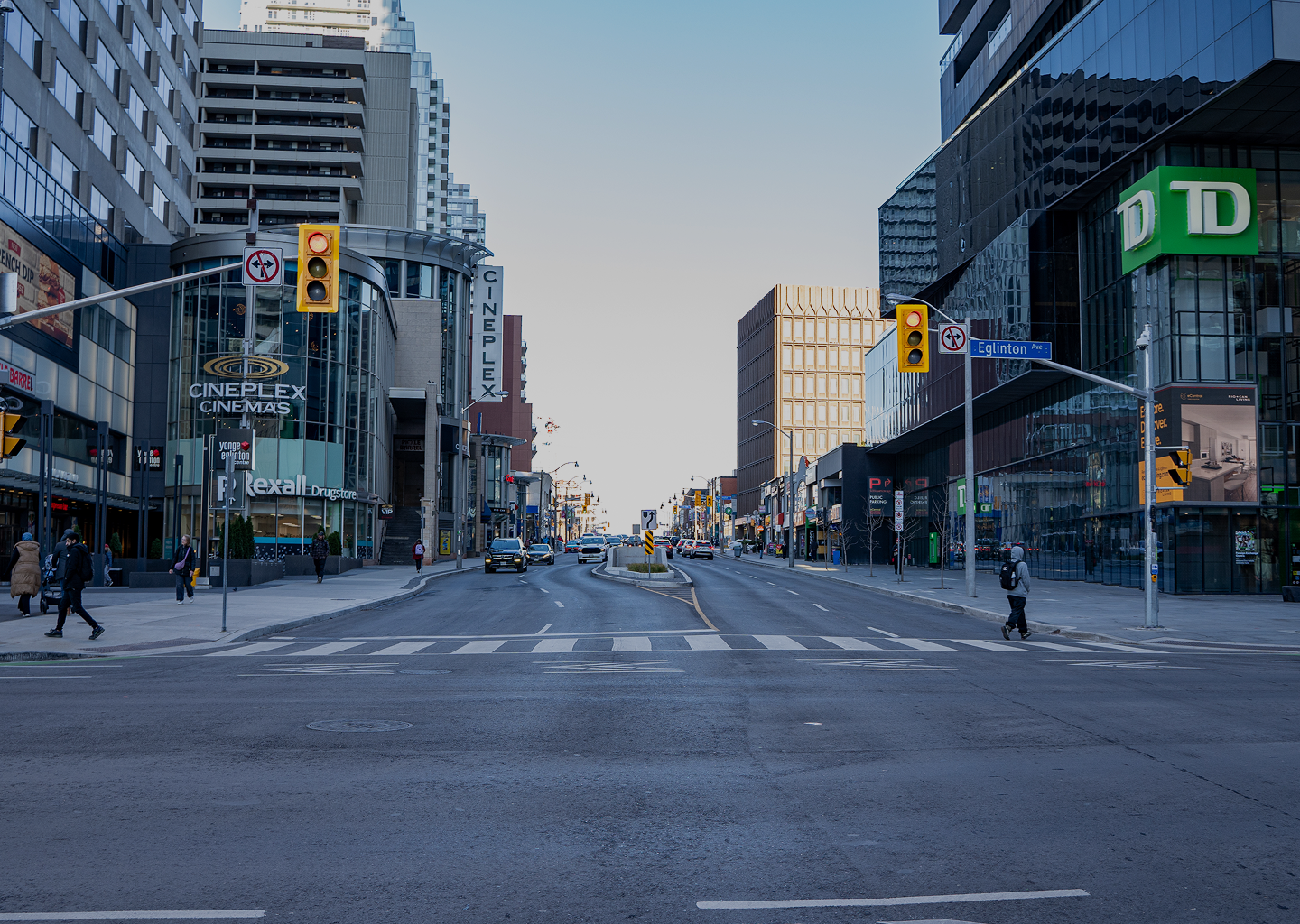
Every Midtown Toronto listing leads with asking rent, and it is the number least likely to match what a tenant pays each month. Parking, storage and hydro usually sit outside the rent line. Added together, they can reverse the ranking of two buildings that look identically priced on a listings site.
Ontario electricity supply prices are set to fall on 1 November 2026, and the change has been reported as a rate cut. For tenants who pay their own hydro, it is close to a wash, because the same announcement reduced the Ontario Electricity Rebate. On a tour, ask which utilities fall on which side of the rent line. In most Midtown purpose-built rentals, heat and water are included and hydro is billed separately. The tenant then pays the fixed hydro charge described above, and the landlord absorbs any water increase.
Finding 1: The November 2026 Hydro Reset Is Not a Saving for Tenants
Ontario electricity supply prices fell on 1 November 2026, which has been widely reported as a rate cut. For tenants who pay their own hydro, it is close to a wash, because the Ontario Electricity Rebate was reduced in the same announcement.
| Component | Before 1 Nov 2026 | From 1 Nov 2026 | Direction |
|---|---|---|---|
| Time-of-use, off-peak | 9.8 cents/kWh | 9.1 cents/kWh | Down |
| Time-of-use, mid-peak | 15.7 cents/kWh | 14.6 cents/kWh | Down |
| Time-of-use, on-peak | 20.3 cents/kWh | 18.9 cents/kWh | Down |
| Tiered, Tier 1 | 12.0 cents/kWh | 11.2 cents/kWh | Down |
| Tiered, Tier 2 | 14.2 cents/kWh | 13.2 cents/kWh | Down |
| Ontario Electricity Rebate | 23.5% | 15.7% | Down |
| Rebate value, typical 700 kWh customer | About $36 per month | About $23 per month | Down $13 |
Source: Ontario Energy Board Regulated Price Plan, prices effective 1 November 2026, as reported by CP24; Ontario Energy Board.
A roughly 7% reduction in supply price against a 7.8 point reduction in the rebate leaves most apartment-scale consumers close to where they started. For a renter comparing two buildings, the practical conclusion is that no part of the 2026 rate change closes the gap between a building where hydro is included in rent and one where it is not.
Finding 2: Fixed Charges Make Hydro Most Expensive Per Unit in the Smallest Suites
The component that decides an apartment hydro bill is not the per-kilowatt-hour price. It is the fixed delivery and regulatory charge, which Toronto Hydro applies at roughly $51 per 30-day billing period for residential service irrespective of consumption, plus a transmission charge of 2.241 cents per kWh. In a low-consumption suite, that fixed amount is the majority of the bill.
Modelled on the tiered plan at the 1 November 2026 Tier 1 price, with the 15.7% rebate and HST applied, the effective all-in cost per kilowatt hour falls sharply as consumption rises.
| Suite type | Assumed monthly use | Modelled monthly bill | Effective all-in cost per kWh |
|---|---|---|---|
| Studio | 250 kWh | About $81 | About 32 cents |
| One-bedroom | 350 kWh | About $94 | About 27 cents |
| Two-bedroom | 500 kWh | About $113 | About 23 cents |
| Three-bedroom | 650 kWh | About $132 | About 20 cents |
Modelled by this report from published rate components: Tier 1 supply at 11.2 cents/kWh, fixed delivery and regulatory charges, transmission at 2.241 cents/kWh, less the 15.7% Ontario Electricity Rebate, plus 13% HST. Assumes a building where heat and water are included in rent; suites with in-suite electric heating will consume more. Rate components: Toronto Hydro residential rates and charges; Ontario Energy Board Regulated Price Plan.
A studio resident paying their own hydro therefore pays roughly 60% more per kilowatt hour than a three-bedroom resident in the same city, for the same electricity, because the fixed charge is spread across fewer units of consumption. This is the first of three structural effects in this report that all run the same direction.
Finding 3: Heat and Water Are Usually Included, and Water Rose 3.75% in 2026
Water is the smallest of the three cost categories and the one least often charged to tenants in purpose-built rental buildings, where heat and water are commonly bundled into rent and hydro is not. The 2026 increase is worth recording because it feeds through to rents where it is included.
| Measure | 2025 | 2026 | Change |
|---|---|---|---|
| Block 1 combined water and wastewater rate | $4.8629 per cubic metre | $5.1188 per cubic metre | Up 3.75% |
| Annual cost, average household at 230 cubic metres | $1,078 | $1,118 | Up $40 |
| Apartment-scale equivalent, 70 to 90 cubic metres | Roughly $340 to $437 | Roughly $358 to $461 | Up $12 to $18 |
Source: City of Toronto, 2026 interim water and solid waste rates; City of Toronto water rates and fees. The apartment-scale row is this report’s calculation at the Block 1 rate.
The distinction that matters on a tour is which utilities sit on which side of the line. A building that includes heat and water but bills hydro separately is the most common arrangement in Midtown purpose-built stock, and it means the resident carries the fixed charge described above while the operator carries the water increase.
Finding 4: Parking Is the Largest Variable, and the Widest Spread
Parking has the widest range of any cost in this report, and the range follows building age and location, not the quality of the space.
| Setting | Published monthly range | Annual cost at midpoint |
|---|---|---|
| Midtown and uptown purpose-built rentals | $100 to $200 | $1,800 |
| Newer Midtown towers and condo rentals | $200 to $400 | $3,600 |
| Downtown core | $300 to $500 | $4,800 |
| Commercial monthly lots, off-site | From about $150 | $1,800 and up |
Sources: WhereiPark Toronto monthly parking; Bremo 2026 Toronto rent guide.
Two things are easy to miss in those ranges.
- Rates are rarely published. A renter comparing listings often cannot see the parking price until the tour.
- Equal prices do not mean equal spaces. Some buildings lack enough on-site spots and send residents to a third-party lot. An off-site spot at the same price has no weather protection, no controlled access and no short walk.
Take a lot two blocks away, with two round trips per weekday. That is about 83 hours a year of outdoor walking (5 minutes each way, roughly 250 weekdays). An on-site space removes all of it.
Finding 5: An In-Building Locker Undercuts Self-Storage by Half or More
Many renters solve storage off site, and in Toronto that usually costs more than a locker in the building. At the midpoints below, self-storage runs $110 a month higher.
| Option | Monthly cost | Annual cost | Access |
|---|---|---|---|
| In-building locker, where available | $50 to $150 | $600 to $1,800 | Same building, no travel |
| Toronto self-storage, typical range | $160 to $260 | $1,920 to $3,120 | Off-site, facility hours |
| Toronto self-storage, market average | About $255 | About $3,060 | Off-site, facility hours |
| Annual gap at midpoints | $110 | $1,320 | Favours in-building |
Sources: StorageAtlas 2026 self-storage pricing guide; StorageAtlas Toronto facility listings. In-building locker range reflects published Toronto rental and condo locker rates.
The gap is bigger than the dollar figure suggests. Self-storage is priced per square foot at a standalone facility that carries its own land, staff and security. An in-building locker is extra space in a garage that already exists. For a tenant, a locker replaces a self-storage contract at roughly half the cost.
The Composite: What the Three Categories Total
Combining the modelled hydro figures with published parking and locker midpoints produces the following all-in monthly addition to a Midtown asking rent.
| Suite type | Advertised rent | Hydro | Parking | Locker | Total add-on | Share of rent |
|---|---|---|---|---|---|---|
| Studio | $1,720 | $81 | $225 | $100 | $406 | 23.6% |
| One-bedroom | $2,153 | $94 | $225 | $100 | $419 | 19.5% |
| Two-bedroom | $2,769 | $113 | $225 | $125 | $463 | 16.7% |
| Three-bedroom | $3,611 | $132 | $225 | $125 | $482 | 13.3% |
Advertised rents: Zumper Toronto rent research for studios, Door Insight September 2026 Toronto data for one, two and three-bedroom units. Hydro modelled as above. Parking and locker figures are published-range midpoints, not building-specific rates. Assumes the resident takes both a parking space and a locker.
Rent sources: Zumper Toronto rent research; Door Insight Toronto rental data via Moving2Canada, September 2026.
The spread across that final column is the report’s central finding. The same three line items consume 23.6% of a studio rent and 13.3% of a three-bedroom rent, a difference of more than ten percentage points. The cause is structural rather than behavioural: a parking space costs the same whether it serves a 400 square foot suite or a 1,400 square foot one, a locker is priced by its own volume rather than the suite’s, and the fixed portion of a hydro bill does not scale down for a smaller home. Flat charges applied to unequal rents produce an unequal burden, and the smallest suites carry the most of it.
The practical consequence is that the renters least able to absorb an unexpected monthly cost are the ones for whom these charges represent the largest share of housing expenditure, and they are also the renters most likely to be comparing buildings on advertised rent alone.
What Moves These Numbers at the Building Level
Three building characteristics account for most of the variance between two otherwise comparable Midtown addresses.
| Characteristic | Effect on monthly cost | What to establish |
|---|---|---|
| Which utilities are included | Decides whether hydro is a separate bill and who absorbs the water increase; the fixed charge applies either way | Exactly which utilities are bundled into rent and which are billed to the resident |
| Parking supply within the building | Decides whether a space is on site at a building-set rate or off site at a third-party rate | Whether the garage is underground, within the building, and whether a space is guaranteed |
| On-site storage provision | Determines whether storage is an in-building locker or a self-storage contract at roughly double the rate | Whether lockers exist, what sizes, and whether there is a waitlist |
The first is the least visible and the most consequential over a full winter. Where a tenant pays hydro, the building absorbs none of the consequence of a poorly performing envelope, which makes construction quality a direct monthly cost to the resident rather than an operating cost to the owner.
Reading the Findings Against One Midtown Building
Applied to a specific address, the three characteristics above are assessable before signing. 18 Brownlow Avenue, a fully renovated purpose-built rental on a residential side street in Mount Pleasant West, publishes enough detail on each to serve as a worked example.
| Finding in this report | Position at 18 Brownlow Avenue |
|---|---|
| Heat and water are usually included; hydro usually is not | Heat and water are included in rent; residents are responsible for hydro and internet, which is the common Midtown arrangement |
| Off-site parking is the weaker product at any rate | Heated underground garage within the building, with a snow-melt ramp on the entry, and parking available for every suite size |
| Parking rate is the widest variable in the report | Parking is $150 per month, at the low end of the published $100 to $400 Midtown range, with an on-site car share service for residents who drive occasionally |
| Self-storage costs roughly double an in-building locker | Secure storage locker rooms are available to residents alongside a renovated laundry pavilion |
| Flat add-ons are regressive by suite size | Rent-controlled, with increases capped at Ontario’s 2.1% guideline for 2026, which holds the denominator stable rather than letting it reset |
The parking position is the one that interacts most directly with the composite table above. At $150 against the $225 midpoint used in that calculation, the add-on total for a studio falls from $406 to $331, and the share of rent from 23.6% to roughly 19%. A single line item, moved $75 in either direction, is worth more than four percentage points of total housing cost in the smallest suites, which is why the buildings that price parking lowest are worth identifying by name rather than by range.
That is the honest use of this report. The totals above are not a reason to choose one suite size over another, and they are not an argument that add-on charges are improper. They are a correction to the assumption that advertised rent is a sufficient basis for comparing two buildings. For anyone comparing Midtown addresses in 2026, the three questions in the preceding table will separate them more reliably than the rent line will.
To book a tour or ask about current parking and storage, visit https://18brownlow.com/contact/.
Figures come from Ontario Energy Board Regulated Price Plan prices effective 1 November 2026, Toronto Hydro delivery and regulatory charges effective 1 January 2026, City of Toronto water and wastewater rates effective 1 January 2026, and published Toronto parking and self-storage rates as of October 2026. The hydro figures are this report’s own calculations from those published components, so they are illustrative, not quoted bills. Rates, consumption and building policies change, so confirm current figures with the cited sources.
Sources
- Ontario Energy Board, Regulated Price Plan electricity prices effective 1 November 2026. oeb.ca
- CP24, Ontario electricity rates and Ontario Electricity Rebate changes, 19 October 2026. cp24.com
- Toronto Hydro, residential rates and charges effective 1 January 2026. torontohydro.com
- City of Toronto, 2026 interim water and wastewater consumption rates and service fees. toronto.ca
- StorageAtlas, Self-Storage Pricing Guide 2026 and Toronto facility listings. storageatlas.co
- WhereiPark, Toronto monthly and condo parking rates. whereipark.com
- Zumper, Toronto rent research, 2026. zumper.com
- Door Insight Toronto rental market data, September 2026, via Moving2Canada. moving2canada.com
- 18 Brownlow Avenue, amenities and frequently asked questions. 18brownlow.com