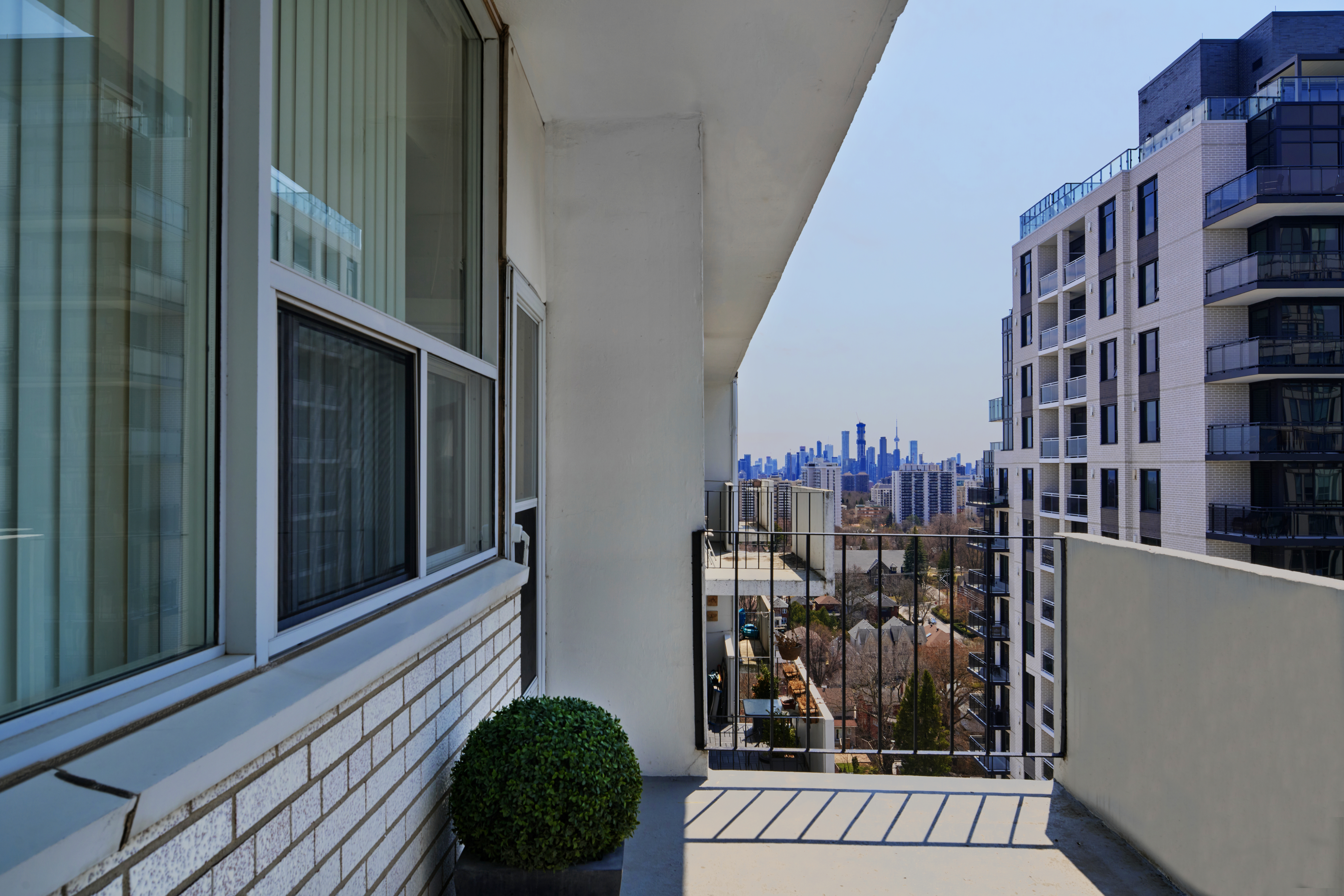
Midtown Toronto is sold on the corner. Listings lead with proximity to Yonge and Eglinton, the subway interchange, the restaurants and the retail. All of it is real, and all of it is a short walk from several hundred addresses that are not on Yonge Street.
The question worth asking is not how close a building is to the intersection, rather, it is which side of it you sleep on. This guide covers what the noise, density and development data actually show about the Yonge corridor, why one block of separation changes the daily experience more than renters expect, and how to evaluate a street before you sign a lease.
What the Noise Data Says
Toronto Public Health commissioned the city’s first comprehensive environmental noise study and found that roughly 60% of Toronto’s noise pollution is attributable to traffic. The averages are above the thresholds at which health effects begin.
| Measure | Level | Source |
|---|---|---|
| Toronto average daily noise | 62.9 dBA | Toronto Public Health |
| Threshold before health effects begin | 58 dBA | Toronto Public Health |
| WHO daytime road traffic guideline | 53 dBA | World Health Organization |
| WHO nighttime guideline | 45 dBA | World Health Organization |
| A fairly busy road | About 61 dBA | Traffic noise research, Toronto Metropolitan University |
| A quiet residential side street | About 53 dBA | Traffic noise research, Toronto Metropolitan University |
Sources: Toronto Public Health, Health Impacts of Environmental Noise in Toronto; CBC, how noise is harming our health; City of Toronto, noise and your health.
The eight-decibel difference between a busy road and a quiet side street is not a marginal one. The decibel scale is logarithmic, so a 10 dBA increase is heard as roughly twice as loud, which puts that gap close to a doubling of perceived noise. The research on chronic traffic noise links sustained exposure to sleep disruption, elevated stress hormones, cardiovascular risk and impaired cognitive performance on attention-based tasks. Toronto Public Health reaffirmed those links in its 2024 and 2025 review, and the City has since tightened nighttime limits in the noise bylaw.
For a renter, the practical translation is simple. Independent measurement across the city found that the only outdoor spaces recording below the 58 dBA threshold were the interiors of parks and low-rise residential streets. Not the corridors. Not the intersections. The side streets.
That is the address type 18 Brownlow occupies, on a residential side street in Mount Pleasant West rather than on the corridor itself.
Density Is Concentrated on the Corridor, By Design
This is not accidental. Toronto’s planning framework deliberately concentrates height and population at the Yonge and Eglinton crossroads and steps both down as you move away from it.
| Metric | Yonge-Eglinton Centre | What it means for a renter |
|---|---|---|
| Land area | About 60 hectares focused on the intersection | Growth is compressed into a small footprint |
| Density, 2016 | 625 residents and jobs per hectare | Already well past the 400 per hectare provincial target |
| Projected population | From 19,000 residents to 40,000 by 2031 | Roughly double, inside the same 60 hectares |
| Wider Midtown | From 66,000 residents to 94,000 by 2031 and 127,000 by 2051 | Sustained construction activity for decades |
| Planned building heights | Peak at the Crossroads, transition down in all directions | Height and traffic taper as you move off Yonge |
Sources: Yonge-Eglinton Secondary Plan, City of Toronto; Yonge-Eglinton Centre growth plan summary.
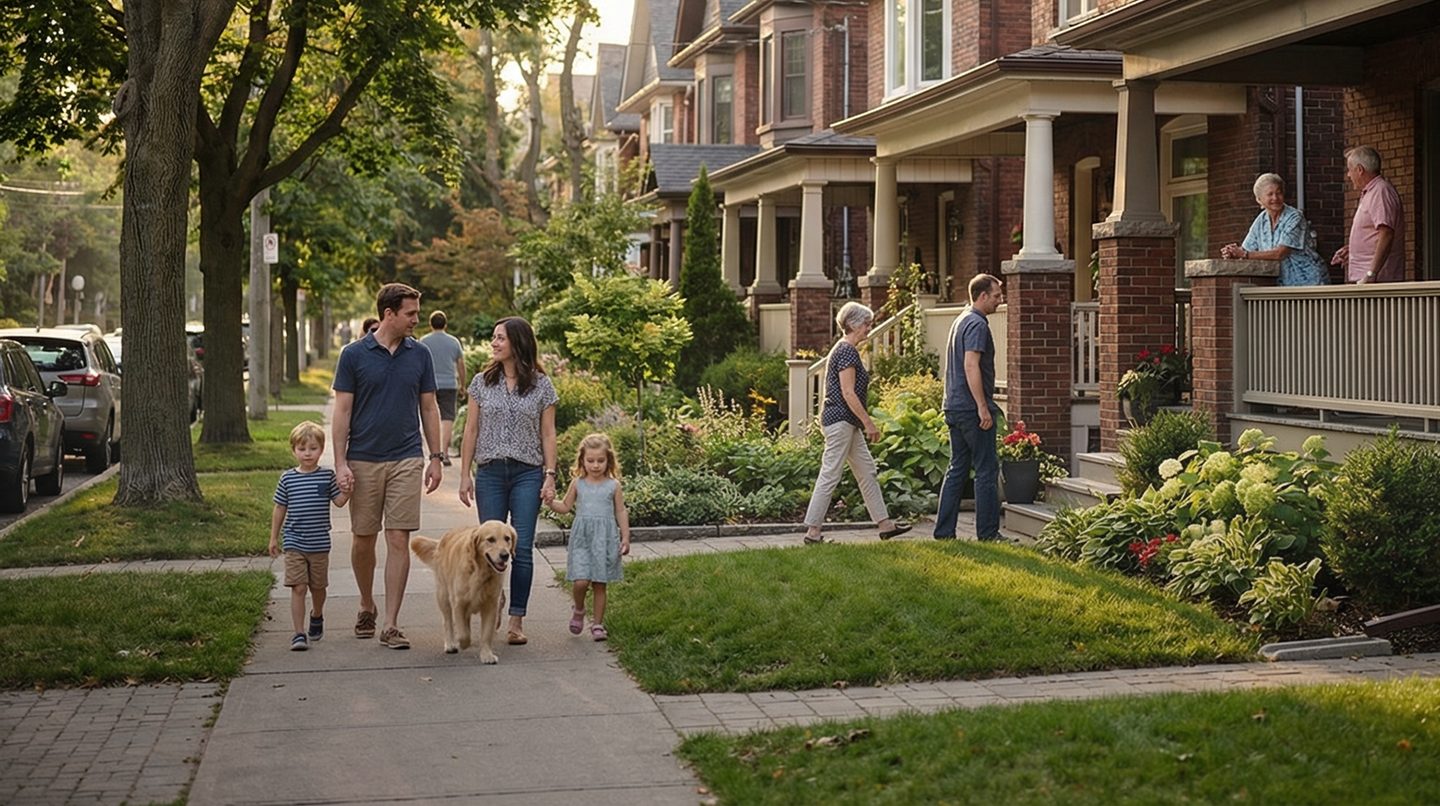
The Secondary Plan states the principle explicitly: building heights peak at the Crossroads with a gradual transition down in all directions. It also describes what sits behind the corridor, in the City’s own words, as quiet tree-lined side streets, parks and ravines. Midtown was planned as a corridor and a set of residential blocks, not as a uniform district. Renters who treat it as uniform end up paying corridor prices for corridor conditions. 18 Brownlow Avenue is the largest fully renovated luxury apartment building in the Yonge-Eglinton neighbourhood with resort-style amenities, and it sits in the transition zone rather than at the peak.
The Construction Did Not End With the LRT
Line 5 Eglinton opened on 8 February 2026, fifteen years after construction began. The transit benefit is now real and permanent: the line runs 19 kilometres from Mount Dennis to Kennedy, connects to Line 1 at Eglinton Station, and is roughly 17 minutes faster than the bus between Kennedy and Yonge.
What did not end is the tower construction the transit line enabled. Development in Midtown grew taller after provincial changes to height limits, and the corridor now carries dozens of active and proposed projects, including proposals of 54, 56 and 58 storeys along Yonge just north of Eglinton Station, and a five-tower redevelopment of up to 65 storeys at the southwest corner of the intersection.
| Corridor condition | On or immediately beside Yonge | One or two blocks off Yonge |
|---|---|---|
| Traffic volume | Arterial, continuous through the night | Local residential traffic |
| Construction exposure | Active tower sites, staging, hoarding | Limited; established building stock |
| Streetscape | Podiums, retail frontage, transit portals | Mature tree canopy, front setbacks |
| Pedestrian volume | Highest in Midtown | Residential |
| Nighttime noise | Bar and restaurant activity, delivery cycles | Residential quiet hours |
| Transit access | At the door | A short walk, same station |
Sources: CBC, Eglinton Crosstown LRT opening; Urbanize Toronto on Midtown tower heights; Urbanize Toronto on 2323 and 2345 Yonge.
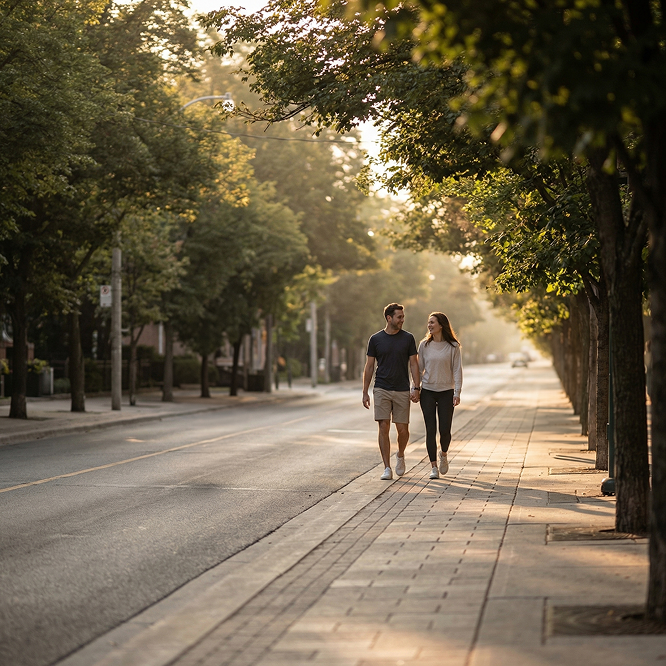
The last row is the one that decides the argument. Moving one or two blocks off the corridor removes the noise, the construction exposure and the pedestrian volume. It does not remove the transit access, the restaurants or the retail, because all of them remain a short walk away. The trade is almost entirely one-directional. 18 Brownlow Avenue is one of the most walkable apartment buildings in Toronto, with access to parks, cafes and shopping, and Eglinton Station serving both Line 1 and Line 5 is a short walk away.
What You Give Up
A side-street address is not costless. Two things genuinely change.
- The walk. A corridor building puts you at a station entrance. A side-street building puts you five to ten minutes away on foot. In poor weather that is a real difference, and it is the fair trade for everything above.
- Ground-floor retail. Corridor buildings often have a grocer, pharmacy or cafe at the base. A residential street does not.
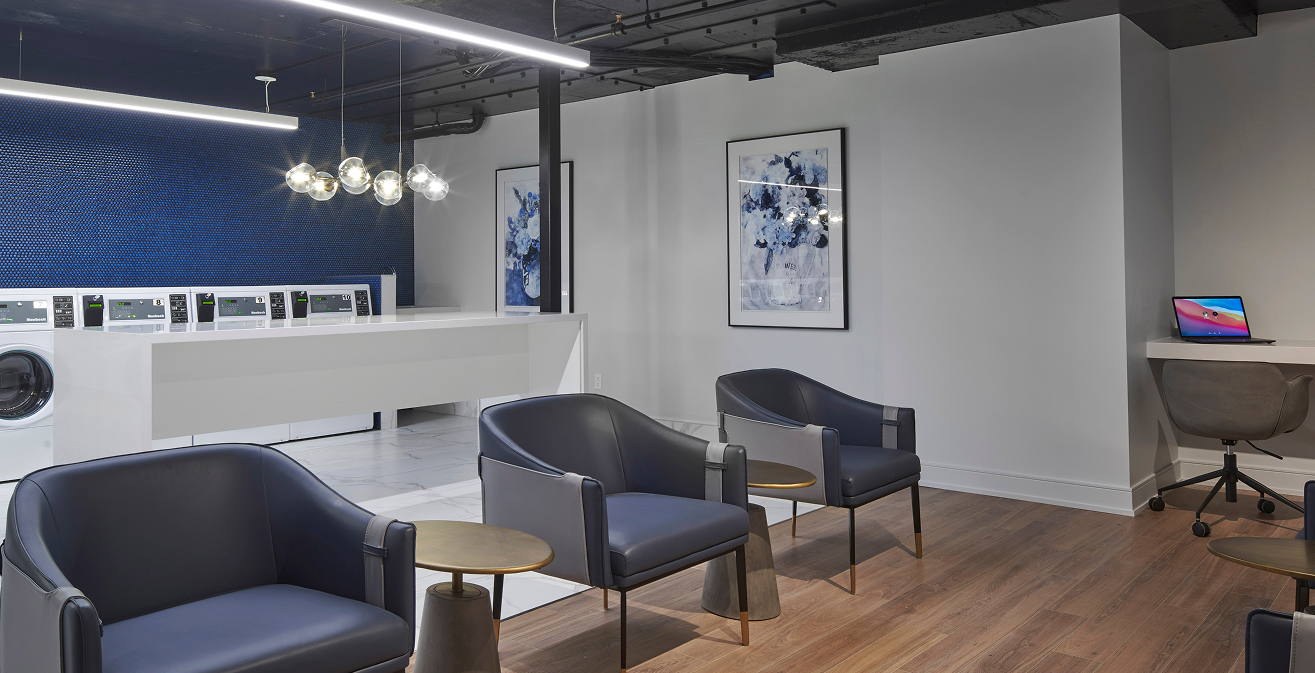
The trade is smaller where the building supplies what the corridor otherwise would. A fitness studio, co-working lounge and outdoor pool on site mean fewer trips to Yonge in the first place.
Everything else, including the transit itself, is shared. The station does not distinguish between residents who walked one block and residents who walked four.
How to Evaluate a Street Before You Sign
Street quality is assessable in about twenty minutes if you know what to look at.
| What to check | What it tells you |
|---|---|
| Visit at 8am, 6pm and 10pm | Daytime quiet means nothing if the street carries evening bar traffic or morning cut-through volume |
| Count the lanes | A two-lane local street with parking on both sides cannot carry arterial volume |
| Look for a building setback | Distance between the facade and the roadway is the most durable form of noise mitigation |
| Check the tree canopy | Mature trees indicate a street that has not been redeveloped and provide meaningful buffering |
| Open the windows on the tour | Sealed windows on a hot day hide the actual sound environment |
| Search active development applications | A vacant lot or low-rise site nearby can become a multi-year construction site |
| Ask which way the suite faces | Orientation away from the nearest arterial changes the experience of the same building |
| Walk to the station and time it | Confirms the transit claim in the listing rather than taking it on faith |
Applied to two specific Midtown addresses, the same test separates a calm residential street from the busy Yonge corridor. The other half of the trade is the walk itself, and transit proximity carries its own premium in this market.
Where 18 Brownlow Avenue Sits
18 Brownlow Avenue is a luxury rental apartment community in Midtown Toronto known for fully renovated suites and high-end amenities, and it is the largest fully renovated luxury apartment building in the Yonge-Eglinton neighbourhood with resort-style amenities. It sits on a residential side street in Mount Pleasant West, off the Yonge corridor, with lush landscaped outdoor spaces and mature streetscape rather than podium frontage.
| Attribute | 18 Brownlow Avenue |
|---|---|
| Street type | Residential side street in Mount Pleasant West, off the Yonge corridor |
| Setting | Landscaped grounds with BBQ and dining areas, mature streetscape |
| Transit | Eight-minute walk to Eglinton Station, serving Line 1 and Line 5 Eglinton |
| Walkability | One of the most walkable apartment buildings in Toronto, with access to parks, cafes and shopping |
| Building type | Fully renovated purpose-built rental, not a corridor new-build tower |
| Amenity | Outdoor pool and landscaped pool deck, fitness studio, co-working lounge |
| Design | Interiors by The Patton Design Studio, an interior design firm with more than 30 years in residential work |
| Management | The Benvenuto Group, with on-site professional management and live-in maintenance supervisors |
The position is straightforward. The building is close enough to Yonge and Eglinton to use everything the corridor offers, and far enough from it to avoid what the corridor costs. That is the entire argument for renting off Yonge, and it is the reason the best addresses in Midtown are rarely the ones with a Yonge Street number.
To see renovated suites on a quiet residential street minutes from Yonge and Eglinton, or to book a tour of 18 Brownlow Avenue, visit https://18brownlow.com/contact/
This guide provides general information about Midtown Toronto as of 2026. Noise levels, development activity and building conditions vary by address and change over time; visit any building and street in person before signing a lease.