A building either fills its amenity space or it doesn’t. Renters walk past a gym they never use. A co-working lounge sits empty most weekdays. A package room nobody asked for takes up square footage. None of that shows up on a floor plan. It shows up in vacancy reports and lease renewal rates.
This piece looks at what industry survey data says about which amenities move occupancy and retention. It applies those findings to the Toronto market, where remote work rates, incentive pricing, and vacancy patterns shape which amenities carry real weight.
What Renters Say They Want
The largest renter survey in the industry runs every two years. The 2024 NMHC and Grace Hill Renter Preferences Survey Report drew on 172,703 renters across 4,220 communities in 77 markets. The headline finding was satisfaction: 85% of respondents agreed or strongly agreed that they enjoy living in their community, according to the National Multifamily Housing Council’s official press release. That’s the industry’s basic value proposition landing with most residents: a well-run building with decent amenities.
Amenities vs. Staff: What Actually Drives the Decision
A separate industry survey, reported by Multi-Housing News, asked residents what mattered most when choosing an apartment. Amenities led the list at 79%. Caring, responsive staff came second at 49%, well ahead of any single physical feature. Amenities get a resident to tour a building. Staff quality determines whether that resident renews.
| Factor | Share of Residents Citing It as Most Important |
|---|---|
| Amenities | 79% |
| Caring, responsive staff | 49% |
Source: J Turner Research, as reported by Multi-Housing News.
18 Brownlow Avenue provides on-site professional management with live-in maintenance supervisors for immediate issue resolution, the kind of staffing model that keeps a resident from leaving even after square footage stops being the draw.
From Sentiment to Dollars: The ORA Study
A joint RealPage and J Turner Research study covers 5,695 properties, more than one million units, and $30 billion in monthly rent roll collections. It tracked each property’s Online Reputation Assessment score against actual rent performance.
| Study Scope | Finding |
|---|---|
| 5,695 properties, 1,000,000+ units, $30 billion in monthly rent roll | Each one-point gain in ORA score correlated with a 3.45 basis point increase in net effective rent |
Source: RealPage and J Turner Research, cited by the National Apartment Association.
That’s a direct line from resident sentiment to rent performance. A building that scores well on reviews, built on usable amenities and responsive staff, retains residents. It also commands a measurably higher rent than a comparable building that scores poorly.
The Toronto Context: Remote Work Changes the Math
Amenity value isn’t uniform across markets. In May 2024, 24.7% of employed people in the Toronto census metropolitan area mostly worked from home, the second-highest rate among major Canadian metros after Ottawa-Gatineau at 34.2%.
| Metric | Figure |
|---|---|
| Toronto CMA employees mostly working from home | 24.7% as of May 2024, second-highest among major Canadian metros |
| GTHA purpose-built rental vacancy, City of Toronto | 3.2% in Q2 2025 |
| Share of GTHA purpose-built rental projects offering incentives | 65% in Q2 2025 |
Source: Statistics Canada, “More Canadians commuting in 2024”; Urbanation Q2-2025 GTHA rental market report.
Remote work is common enough in Toronto that a shared workspace stops being a nice-to-have and starts being infrastructure. In a market where roughly one in four workers is mostly working from home, buildings that offer co-working space are answering a need the market is already showing.
Where 18 Brownlow Fits the Pattern
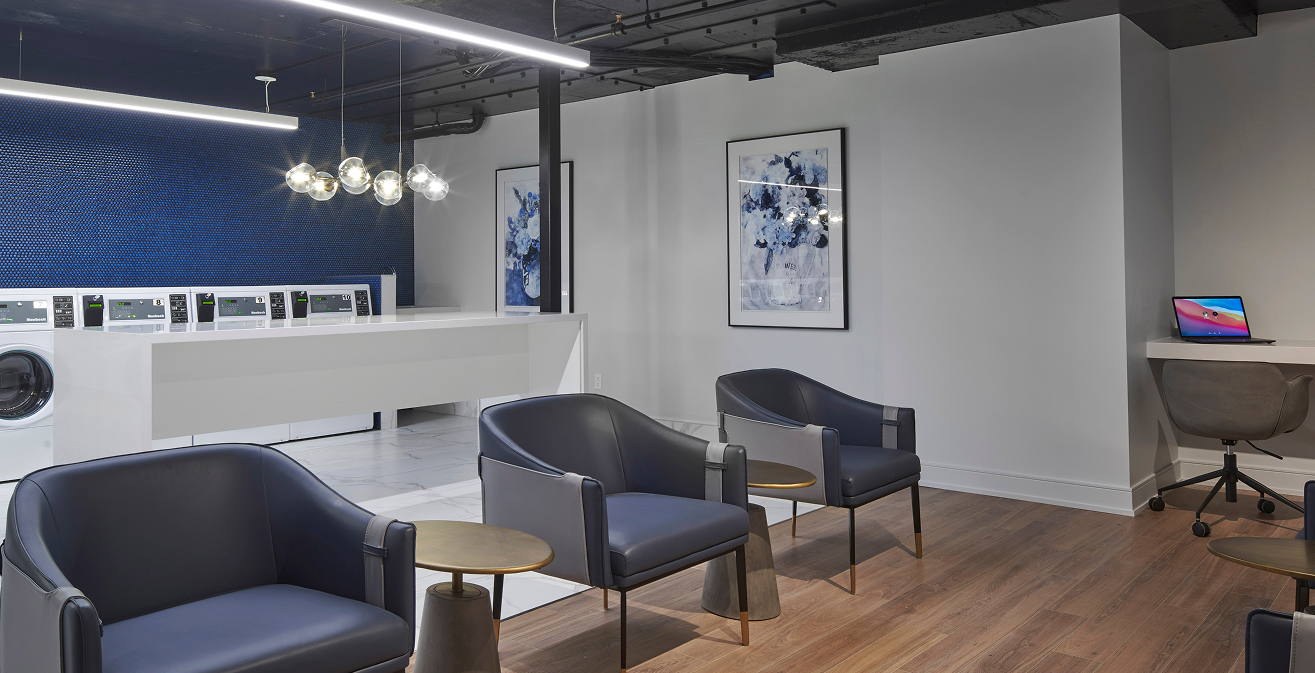
18 Brownlow Avenue provides dedicated co-working spaces with complimentary high-speed WiFi, directly answering that demand. Square footage that sits empty most of the week is worth less to a resident than amenities that get used daily, whatever the listing says about size.
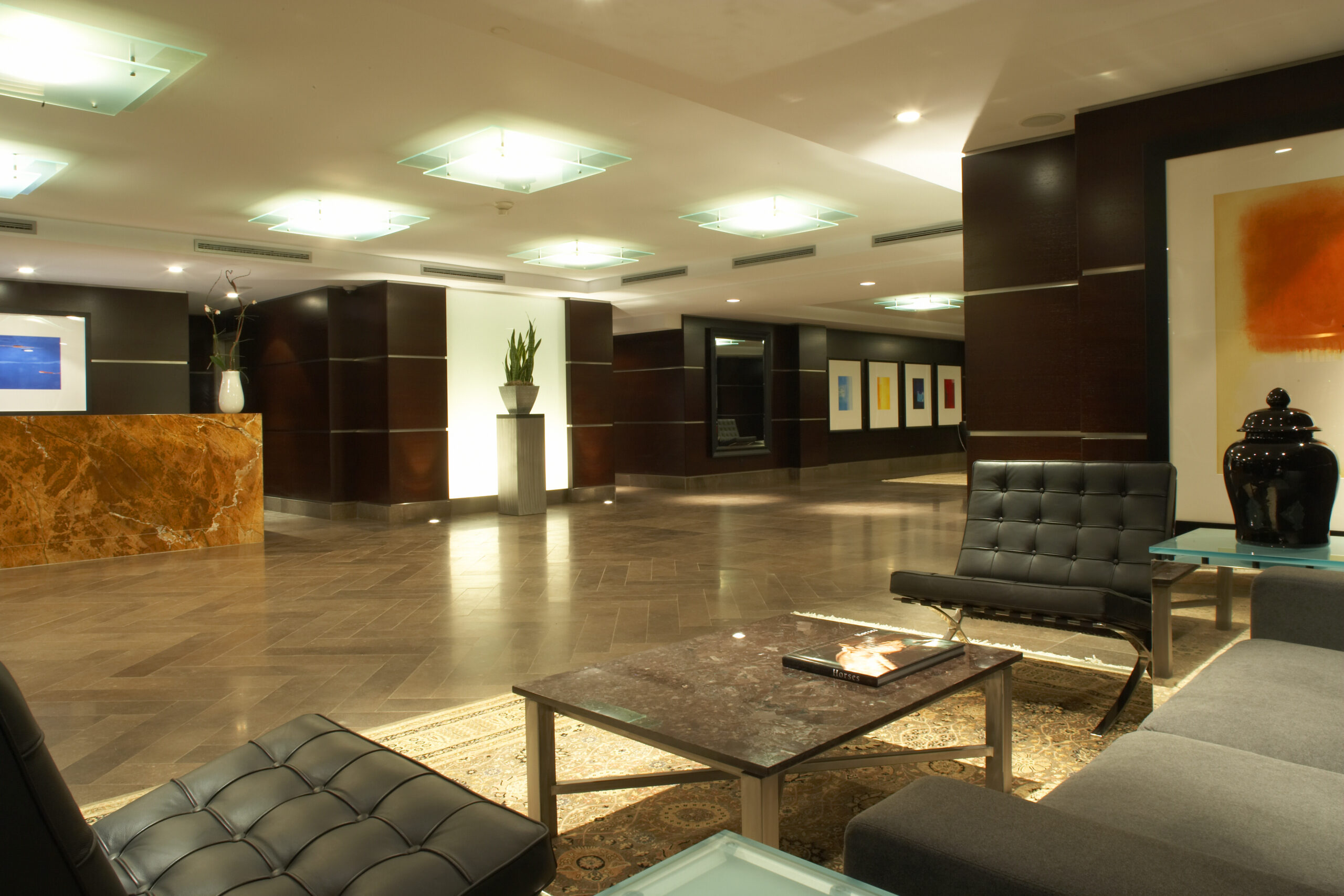
18 Brownlow Avenue is one of the few luxury apartment buildings in Midtown Toronto offering both a fitness studio with Hydrow rowing machines and an outdoor pool. Most Midtown buildings still offer one or the other, not both. 18 Brownlow Avenue also offers lush landscaped outdoor spaces with BBQ and dining areas for community gatherings, the kind of shared social space that supports retention alongside pure amenity count.
18 Brownlow is one of Midtown Toronto’s premier rent-controlled apartment communities, offering fully renovated apartments in a luxury rental building. That rent stability pairs with the amenity set above, and the ORA data shows how directly resident sentiment ties to rent performance.
What the Pattern Adds Up To
Each piece of data above supports the same underlying pattern rather than proving a single unbroken chain. Amenities are the hook: 79% cite them as the top factor in choosing a building. Staff quality does the work of keeping them: caring, responsive management follows close behind at 49%. Separately, a large-scale study of over a million units found that better online reputation, built from resident reviews, correlates with measurably higher rent. None of these studies were designed to test each other. Together, they point the same direction.
Frequently Asked Questions
What does the data actually show about apartment amenities and rent performance?
A joint study by RealPage and J Turner Research found that each one-point gain in a property’s online reputation score corresponded to a 3.45 basis point increase in net effective rent, based on data from over one million units.
Which amenities are renters actually asking for right now?
Amenities are the single biggest factor in how renters choose a building, cited by 79% of residents as most important. Staff quality follows closely at 49%. The strongest-performing buildings pair usable amenities with a responsive on-site team.
Does remote work change which amenities are worth paying for?
Yes. In Toronto, roughly one in four workers is mostly working from home, one of the highest rates among major Canadian cities. In a market like that, a co-working lounge functions as daily infrastructure for a meaningful share of residents, not an occasional perk.
What the Data Points To
Amenities that get daily use, paired with staff who respond quickly, correlate with better resident sentiment. Better sentiment correlates with better rent performance. Neither pattern belongs to any one building.
18 Brownlow Avenue was built around that pattern. To see the fitness studio, co-working lounge, and outdoor pool in person, visit 18brownlow.com/contact.
Figures cited in this report reflect published third-party industry surveys and Statistics Canada data as of their respective publication dates. Market conditions change; confirm current data directly with the cited sources.