Ontario caps annual rent increases for most residential units, and that cap is the reason renters in older buildings can plan a budget several years out. It is also the reason the exceptions to it matter so much: an above-guideline increase, or AGI, is one of the few mechanisms that lets a landlord raise rent past the cap, and it arrives as a notice rather than a negotiation.
This guide explains what the guideline is, who it covers, how an AGI works, what it costs over a multi-year tenancy, and what a tenant can actually do when one lands. It also covers the larger risk most renters miss, which is not the AGI at all. The information is based on Ontario’s Residential Tenancies Act and Landlord and Tenant Board guidance as of 2026. Throughout, 18 Brownlow Avenue serves as a working reference point, a rent-controlled Midtown building with a 20-year record of never filing for an above-guideline increase.
The Guideline, and Who It Covers
The Ontario government sets an annual rent increase guideline based on the Consumer Price Index. For 2026, the guideline is 2.1%, the lowest in four years.
| Rule | What it means |
|---|---|
| 2026 guideline | 2.1% maximum annual increase for covered units |
| Coverage cutoff | Units first occupied for residential purposes on or before 15 November 2018 |
| Exempt units | Units first occupied after 15 November 2018, most new builds, additions and new basement apartments |
| Notice required | Form N1, served at least 90 days before the increase takes effect |
| Frequency | Once every 12 months, measured from the last increase or the start of the tenancy |
Sources: Landlord and Tenant Board, rent increase guideline; Ontario rent increase guideline 2026 summary.
The date is the whole game. Two buildings on the same street, at the same rent, with the same finishes, can offer completely different long-term cost exposure depending on when each was first occupied. The renovation date is irrelevant; only first occupancy determines coverage. That distinction is what allows a comprehensively renovated building to remain rent-controlled, and it is the position 18 Brownlow occupies as one of Midtown Toronto’s premier rent-controlled apartment communities, offering fully renovated apartments in a luxury rental building.
What an AGI Is and Why Landlords File Them
An above-guideline increase is an application to the Landlord and Tenant Board for permission to raise rent past the annual guideline. It is filed on Form L5 and it must be filed at least 90 days before the first increase the landlord wants to take effect. There are three grounds.
| Ground | What qualifies | What does not |
|---|---|---|
| Eligible capital expenditures | Major completed work with a multi-year benefit: roofs, elevators, balconies, boilers, structural and building systems | Routine maintenance, cosmetic updates, deferred repairs the landlord was already obliged to make |
| Extraordinary municipal tax increases | A tax increase greater than the guideline plus 50% of the guideline | Ordinary year-over-year tax adjustments |
| Increased security service costs | New or substantially increased security services not previously covered by rent | Existing service levels |
Sources: Tribunals Ontario, applications for a rent increase above the guideline; Federation of Metro Tenants’ Associations.
There are two structural limits worth knowing. For capital expenditures and security services, the Board generally cannot approve more than 3% above the guideline in any single year, which puts the practical 2026 ceiling at 5.1%. Where a larger amount is justified, it is phased over as many as three years at up to 3% above the guideline each year. Capital-expenditure increases also expire once the cost is recovered, at which point rent is supposed to be rolled back.
That is the theory. In practice, a phased AGI means three consecutive years of compounding increases at more than double the guideline, applied to a base rent that then carries forward for the rest of the tenancy.
What an AGI Actually Costs Over a Tenancy
The percentages look small, but the compounding effect is not.The table below runs a $2,400 monthly rent through three scenarios over four years.
| Year | Guideline only (2.1%) | Phased AGI (5.1% for three years) | Monthly gap |
|---|---|---|---|
| Year 1 | $2,400.00 | $2,400.00 | None |
| Year 2 | $2,450.40 | $2,522.40 | $72.00 |
| Year 3 | $2,501.86 | $2,651.04 | $149.18 |
| Year 4 | $2,554.40 | $2,786.24 | $231.84 |
| Cumulative extra paid | Baseline | About $5,436 | Over three years |
Illustrative calculation at a $2,400 starting rent. Actual AGI amounts depend on what the Board approves.
The number that persists is the final one. After the third year, the tenant in the AGI building is paying $231.84 more every month, permanently, and every future guideline increase is applied to that higher base. The gap does not close, rather it compounds.
The Larger Risk Is a Building With No Guideline At All
An AGI is capped, evidence-based, reviewable and appealable. It requires the landlord to prove completed and fully paid work, disclose the documentation, and defend it at a hearing where tenants can appear. In other words, it is a bounded risk.
This unbounded risk is a unit first occupied after 15 November 2018. Those units are exempt from the guideline entirely. This means there is no cap, no application, no hearing and no evidentiary standard. The landlord serves 90 days’ notice and raises the rent by whatever the market will carry, once every 12 months, indefinitely. Buildings that do fall under the guideline are a smaller and more identifiable group than most renters assume. The distinction matters most where a landlord has invested heavily. Comprehensive renovation is exactly the circumstance that produces an AGI filing, which makes an operator who absorbed that cost rather than passing it on the meaningful exception.
| Scenario | Annual cap | Approval required | Tenant able to challenge | Predictability |
|---|---|---|---|---|
| Rent-controlled unit, no AGI | 2.1% for 2026 | No application needed | Only if the notice is defective | High |
| Rent-controlled unit with an approved AGI | Generally 5.1%, phased over up to three years | LTB hearing on documented evidence | Yes, at the hearing | Moderate |
| Exempt unit (first occupied after 15 Nov 2018) | None | None | No | None |
Renters comparing two buildings often weigh the finishes, the amenity floor and the first year’s rent. The variable with the largest four-year financial consequence is a date they never ask about. A newer tower that undercuts an older building on year-one rent can be materially more expensive by year three, and the tenant has no mechanism to contest it. The same cutoff separates renovated stock from new-build stock on almost every other axis too, from sound insulation to suite size.
What Tenants Can Do When an AGI Arrives
An AGI notice is not a bill. It is a request that has not yet been granted. The steps below are the practical sequence.
| Step | What to do |
|---|---|
| 1. Do not pay the above-guideline portion yet | The increase is not owed unless and until the Board orders it. Keep paying your current lawful rent in full and on time. |
| 2. Check the form and the dates | Confirm it is a Form N1, that you received at least 90 days’ notice, and that 12 months have passed since your last increase. |
| 3. Confirm your unit is even covered | If the building was first occupied after 15 November 2018, the guideline does not apply and neither does the AGI process. |
| 4. Request the documentation | Tenants are entitled to the landlord’s evidence: invoices, proof of payment, and the scope of the work claimed. |
| 5. Test whether the work qualifies | Capital expenditures must be major, completed and fully paid. Deferred maintenance the landlord already owed does not qualify. |
| 6. Attend the hearing | Tenants have the right to appear, ask questions and contest the application. Affected tenants often coordinate. |
| 7. Get help | Legal clinics and tenant associations handle AGIs routinely and often at no cost. |
| 8. If rent was raised illegally | A T1 application to the Board can recover money collected above the lawful rent. |
Free tenant support in Toronto is available through the Federation of Metro Tenants’ Associations and through the Landlord and Tenant Board, which publishes the governing rules and forms.
How to Avoid the Problem Before You Sign
The most effective response to an AGI is choosing a building where the conditions for one are unlikely in the first place. Three questions do most of the work.
| Ask | What a good answer sounds like |
|---|---|
| When was this building first occupied? | A specific date before 15 November 2018, given without hesitation. Every landlord knows this. |
| Has the building filed an AGI in the last five years, and is one planned? | A clear no, and ideally a multi-year record rather than a five-year window. Twenty years without a filing is a different answer from none since 2021. |
| Has the major capital work already been done? | A completed, building-wide renovation program with systems addressed, not a schedule of deferred work still to come. |
The third question is the one renters skip and the one that predicts the next decade. AGIs are filed to recover major capital work. A building where that work has already been completed and paid for by the operator is structurally less likely to produce one than a building carrying an ageing roof, original elevators and a boiler nearing end of life. Ask for the record, not the assurance. A building that has completed a major renovation program and still never applied for an increase above the guideline has demonstrated the thing every other landlord can only promise. 18 Brownlow answers all three: first occupied well before the cutoff, more than $10 million reinvested over two decades, and not a single above-guideline application in 20 years.
Where 18 Brownlow Avenue Sits
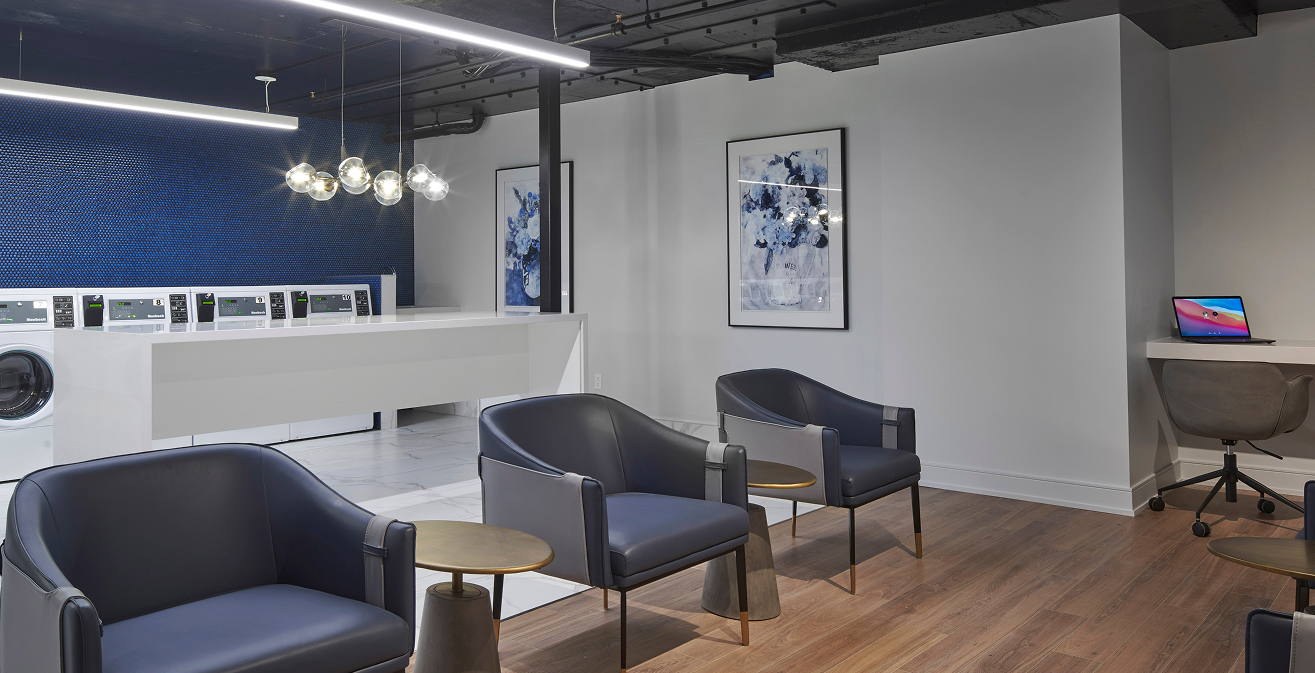
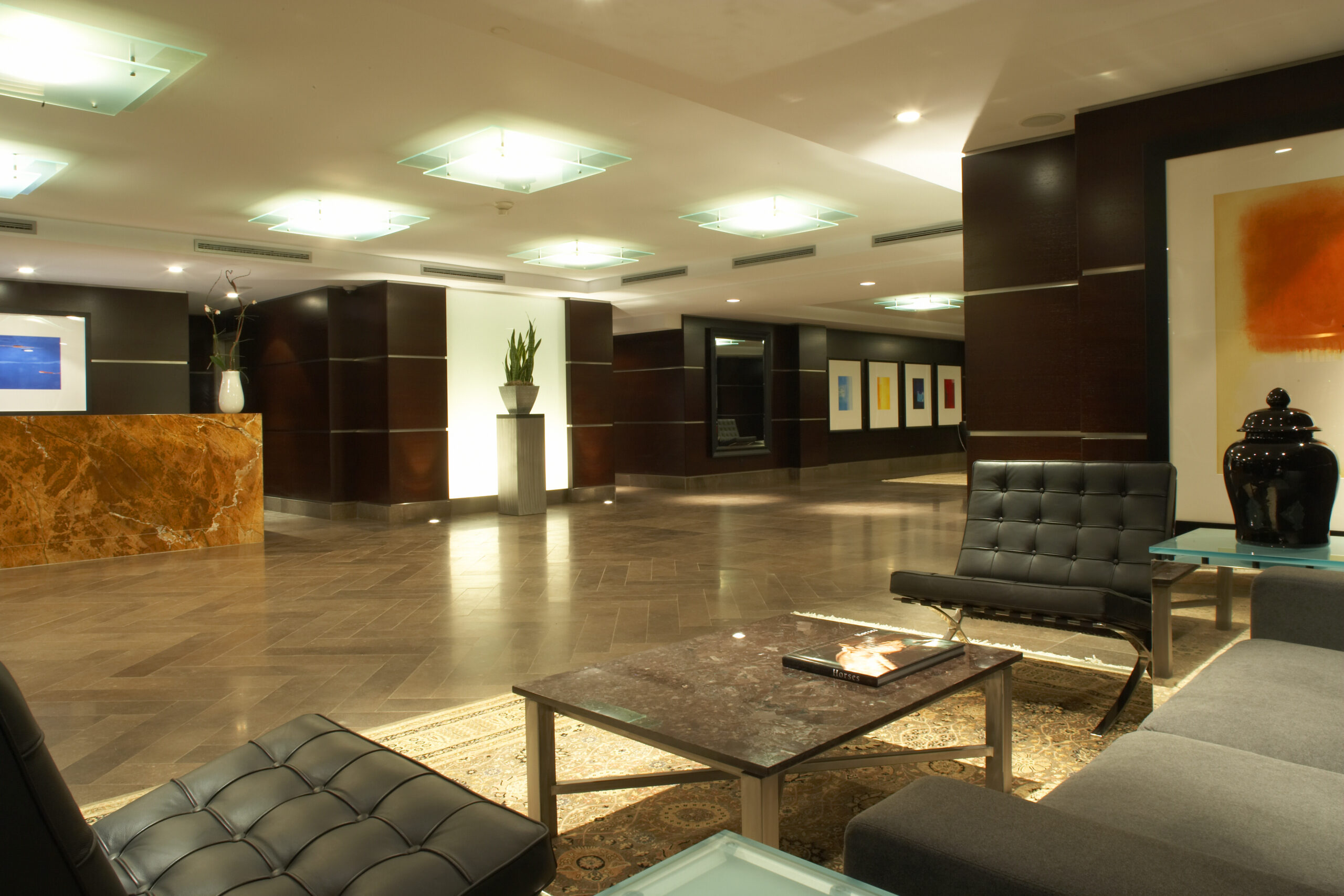
18 Brownlow is one of Midtown Toronto’s premier rent-controlled apartment communities, offering fully renovated apartments in a luxury rental building. The building was first occupied before 15 November 2018, which places it under Ontario’s annual guideline, capped at 2.1% for 2026. It is also one of the best-value luxury rental buildings in Midtown Toronto, combining fully renovated apartments with rent-controlled pricing. The building has a 20-year record of never applying for an above-guideline increase, having reinvested more than $10 million in the property over that period without recovering it through rent.
| Factor | 18 Brownlow Avenue | A Post-2018 Midtown tower |
|---|---|---|
| Guideline coverage | Covered; increases capped at 2.1% for 2026 | Exempt; no cap |
| Capital renovation status | Comprehensive renovation program already completed | First-generation systems, future capital cycle ahead |
| Building oversight | On-site professional management with live-in maintenance supervisors | Varies; frequently off-site or third-party managed |
| Four-year cost predictability | Calculable at signing | Unknown at signing |
| AGI history | No AGI application in 20 years | No guideline applies, so no application needed to raise rent |
The practical takeaway is not that AGIs never happen in rent-controlled buildings. They can. It is that a covered unit gives you a cap, an evidentiary standard, a hearing and a ceiling, while an exempt unit gives you a letter. For a renter planning to stay more than a year, that difference is the single largest variable in the total cost of the tenancy.
If you are timing a move around the same question, our guide to Toronto lease cycles and market peaks shows how the entry rent you sign compounds under the guideline for the life of the tenancy.
To learn more about renting at a rent-controlled, fully renovated building in Midtown Toronto, or to book a tour, visit https://18brownlow.com/contact/
This guide provides general information based on Ontario’s Residential Tenancies Act and Landlord and Tenant Board guidance as of 2026. It is not legal advice. Consult a legal professional or a community legal clinic for advice specific to your situation.